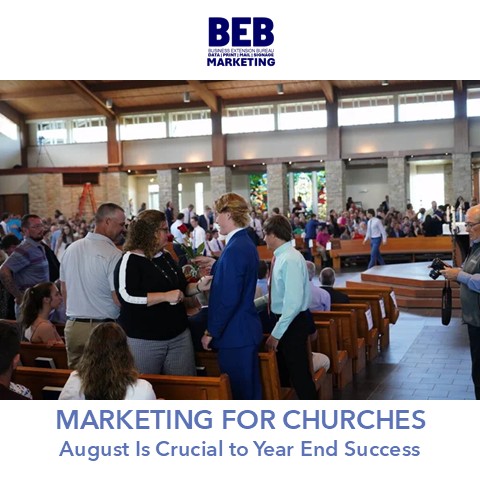
 For churches, August is the most critical month for Q4 planning. By the time September hits, the “Back to School” momentum takes over, and the window for high-quality production for Thanksgiving and Christmas begins to close.
In August, your leadership and creative teams should be working on several distinct tracks of direct mail.
1. Vision & Year-End Giving
While the mailer won’t go out until November, the storytelling starts in August.
The Task: Identify the “Hero Story” of 2026. What is one specific life or community project that was changed by the church this year?
Logistics: Work closely with your mailing marketer and review last year’s giving data. Segment your list into consistent donors, lapsed donors, and new members.
The Goal: Prepare a multi-page “Impact Report” (arriving mid-November) that feels like a high-end magazine rather than a bill. August is when you capture the “real-life” ministry shots needed through high-res photos for this piece.
2. Community Outreach -Christmas & Advent
Christmas is the one time of year when unchurched neighbors are most likely to open a physical invitation.
The Task: Finalize your Christmas Eve service times and special event dates (e.g., “Bethlehem Village,” “Christmas Concert”).
Logistics: In August, have your mailer map out the 3–5 mile radius around your locations.
Creative Focus: Design a “Fridge-Worthy” piece. Instead of just a postcard, consider a high-quality card with a built-in ornament or a heavy-stock “Advent Calendar” that families will keep on their counter for 25 days.
3. New Moves
August and September are high-volume months for home sales in Houston and other major metros as families settle before the school year fully ramps up.
The Task: Introduce your campus to those who have recently moved into the neighborhood.
Logistics: This tactic works best when approached on a monthly basis. Work with your mailer to set up a monthly schedule to reach out to these potential congregation members by sending a postcard.
The Hook: Offer a small “Welcome Gift” (like a free coffee at the church or invitation to a specific event such as bible study classes, or Wednesday night services.
4. Thanksgiving “Gratitude” Card
One of the most effective church direct mail pieces is a “no-ask” postcard that arrives the week of Thanksgiving. It simply says, “We are thankful for you and our community.” * Why it works: It cuts through the “noise” of Black Friday ads.
August Planning: Assign your deacons or small group leaders to hand-write short notes on 10–20 cards each. Collecting these “personal touches” in August/September ensures they are ready for a November mailing.
August is the strategic “bridge” where fourth-quarter success is either secured or surrendered for your church. Because the final three months of the year contain the highest-stakes events—including the critical year-end giving push and Christmas Eve outreach—the lead time required for high-quality storytelling, professional photography, and print production is significant. Planning in August allows leadership teams to move beyond reactionary flyers and instead develop a cohesive narrative that connects a family’s “back-to-school” transition directly to Advent and year-end stewardship. By locking in themes before the October production bottlenecks, churches ensure their physical invitations arrive in the “quiet” window before the mailbox is overwhelmed by retail and mid-term election “noise”. Ultimately, August execution ensures that when the community looks for connection during the holidays, your church’s presence is already established as a tangible, high-quality invitation on their kitchen table.